Saltwater Pool Maintenance: The Complete Homeowner Guide

Saltwater pools have surged in popularity over the last decade, and for good reason. They offer a gentler swimming experience, lower long-term chemical costs, and water that feels noticeably silkier against your skin. But the word “saltwater” leads many homeowners to believe these systems are maintenance-free — and that misconception is where problems begin. A saltwater pool still requires regular attention, just a different kind of attention than a traditional chlorine setup demands.
How a Saltwater Chlorination System Actually Works
Understanding the mechanics behind your salt chlorine generator is the first step toward keeping it running efficiently. The system uses electrolysis to convert dissolved sodium chloride into hypochlorous acid — the same sanitizing agent found in conventional chlorine pools. A set of metallic plates inside the generator’s cell carries an electrical charge that splits the salt molecules apart, producing chlorine that sanitizes your water before the cycle reverses and reforms the salt. This closed loop means you rarely need to add chlorine manually, but it also means the generator cell itself becomes the component you need to watch most closely.
Scale buildup on the cell plates is the single most common maintenance issue saltwater pool owners face. Calcium carbonate deposits gradually coat the plates and reduce their ability to generate chlorine. Most modern units have a self-cleaning reverse-polarity feature, but this only slows the buildup — it does not eliminate it entirely. You should visually inspect the cell every three months and soak it in a diluted muriatic acid solution when deposits become visible. Neglecting this step shortens cell life from the typical five to seven years down to as few as two.
Weekly Chemistry Checks You Cannot Skip
Even though your generator handles chlorine production, the surrounding water chemistry still needs your hands-on involvement. Test your free chlorine and pH levels at least twice a week during swimming season. Saltwater systems tend to push pH upward over time because the electrolysis process naturally produces sodium hydroxide as a byproduct. Letting pH drift above 7.6 not only reduces chlorine effectiveness but accelerates calcium scaling on your cell plates and pool surfaces alike.
Salinity itself should be tested every two weeks. Most generators operate best between 2,700 and 3,400 ppm of salt, and levels drop gradually through splash-out, backwashing, and rainwater dilution. Running the generator with low salt concentration forces it to work harder and burns through the cell faster. On the other end, excessively high salt levels can corrode metal fixtures and ladders around the pool. A simple digital salinity meter — available for under forty dollars — pays for itself by protecting your most expensive component.
Cyanuric acid, often called stabilizer, deserves particular attention in outdoor saltwater pools. This chemical shields chlorine molecules from UV degradation, and without adequate levels between 70 and 80 ppm, your generator will struggle to keep up with demand on sunny days. Because saltwater generators produce unstabilized chlorine, you need to add cyanuric acid separately and monitor it monthly. If you are new to general pool maintenance practices, understanding stabilizer is one of the most impactful things you can learn early.
Seasonal Considerations and Winterization
When water temperatures drop below 60°F, most salt chlorine generators should be turned off. Running the cell in cold water produces minimal chlorine and accelerates wear on the plates. In climates where pools stay open year-round, reducing the generator output to its lowest setting during cooler months is usually sufficient. For those in freeze-prone regions, our above-ground pool winterization guide covers the broader process, but saltwater systems add an extra step: you should remove the cell from the plumbing line, clean it thoroughly, and store it indoors until spring.
Spring startup is equally important. Before reconnecting the cell, inspect the o-rings and unions for cracks that may have developed during storage. Run your filtration system for 24 hours before activating the generator so that any debris or dead algae from the off-season gets filtered out first. Then test your salt level, adjust as needed, and bring the generator online at about 50 percent output for the first week while you dial in your chemistry. Trying to shock-start the system at full power after months of dormancy is hard on the cell and rarely produces the results homeowners expect.
Protecting Pool Surfaces and Equipment from Salt
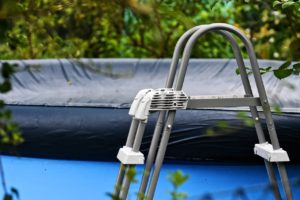
Salt is mildly corrosive over long periods, and certain materials around your pool need protection. Natural stone coping and decking should be sealed annually with a penetrating sealer designed for salt environments. Metal handrails, ladders, and light fixtures — especially those made from lower-grade stainless steel — will show corrosion faster in a saltwater pool than in a traditionally chlorinated one. Rinsing metal fixtures with fresh water every few weeks helps, and applying a thin coat of silicone-based lubricant to bolt threads prevents them from seizing.
Your pool’s interior finish also matters. Plaster surfaces can etch more quickly when pH and calcium hardness drift out of range in a salt system. If you are choosing a special pool design and plan to use a salt system, consider a pebble or quartz aggregate finish over standard white plaster — these surfaces resist salt-related etching far better and add visual character to the pool at the same time.
When to Call a Professional
Most weekly saltwater pool maintenance is well within the ability of any homeowner willing to learn. But certain situations warrant professional help. If your generator consistently shows error codes despite a clean cell and proper salt levels, the control board may be failing. If you notice green pool water or persistent algae that does not respond to superchlorination, the issue may lie deeper in your plumbing or filtration. And if your cell needs replacement, having a technician verify that the new cell is compatible with your control unit avoids a costly mismatch. Pool maintenance is a partnership between the owner and the occasional expert — knowing where that line falls is part of being a responsible pool owner.