Above-Ground Pool Winterization: Step-by-Step Cold Weather Prep

Closing an above-ground pool for winter is one of those tasks that feels like it should be simple — drain a little water, throw on a cover, and walk away. But the difference between a pool that reopens cleanly in spring and one that greets you with green sludge and cracked fittings comes down to how carefully you handle the closing process. Above-ground pools are especially vulnerable to freeze damage because their walls, plumbing, and filtration components sit exposed to the elements rather than being buried underground.
Timing Your Pool Closing Right
The ideal window for winterizing an above-ground pool is when daytime water temperatures consistently stay below 65°F. Closing too early — while the water is still warm — creates a breeding ground for algae under the cover where sunlight can still penetrate. Closing too late risks a sudden freeze catching you with water still sitting in vulnerable plumbing lines. In most northern climates, this sweet spot falls between mid-October and early November, though your specific microclimate matters more than the calendar date.
Balancing Chemistry Before You Cover
Your water chemistry at closing determines what you will find at opening. Start by testing and adjusting pH to the 7.2–7.4 range, alkalinity to 80–120 ppm, and calcium hardness to 175–225 ppm. Then superchlorinate the pool to at least 10 ppm of free chlorine. This heavy dose kills any lurking algae spores and bacteria that would otherwise feast on stagnant water all winter. Follow the shock treatment with a quality winterizing algaecide — not the cheap copper-based varieties that stain liner surfaces, but a polyquat or polymer-based formula rated for long-term protection.
If you are running a saltwater chlorination system, turn off the generator before shocking. The high chlorine levels from manual shock can damage the cell plates if the generator is producing simultaneously. Remove and clean the cell as part of the winterization, storing it indoors where temperatures stay above freezing.

Draining Lines and Protecting Equipment
Water expands roughly nine percent when it freezes, and that expansion cracks pump housings, filter tanks, heater cores, and chlorinator bodies with zero mercy. Every component in your above-ground pool’s plumbing loop needs to be drained completely. Disconnect hoses from the skimmer and return fittings, and let them drain by gravity. Remove the drain plugs from your pump, filter, heater, and any inline chemical feeders. Tilt the pump housing to let trapped water escape from internal chambers. Some pool owners use a shop vacuum to blow remaining water out of short plumbing runs — this extra step is cheap insurance against a fifty-dollar hose fitting that could crack and cost you hundreds in spring repairs.
If your pool pump or filter has been giving you trouble during the season, winter is the ideal time to address those issues. A pump that was struggling with air leaks or low flow during summer will only perform worse after sitting idle for months with compromised seals.
Lowering the Water Level
For above-ground pools, lower the water level four to six inches below the skimmer opening. Going lower than that on a vinyl-liner pool risks the liner pulling away from the wall and developing wrinkles that are nearly impossible to smooth out once the pool refills. Going higher leaves water sitting in the skimmer throat where it can freeze and crack the faceplate. Use the return line fitting as your drain point — attach a backwash hose and let gravity do the work, or use a submersible pump for faster results.
Installing the Winter Cover
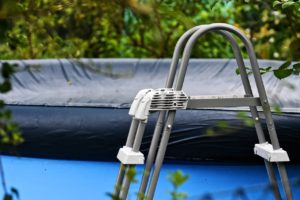
A quality winter cover is not optional — it is the single most important piece of winterization equipment you own. For above-ground pools, a solid vinyl cover with a cable-and-winch tightening system works best. Avoid using your regular solar cover as a winter cover; solar covers are designed to let light through, which encourages algae growth in the still water beneath. The winter cover should block all sunlight, resist wind uplift, and support the weight of rain, leaves, and moderate snow loads.
Place an air pillow in the center of the pool before positioning the cover. This pillow absorbs the pressure of ice expansion on the pool walls, distributing the force inward rather than outward against the liner and frame. It also creates a pitch that helps rainwater and snowmelt run off the cover rather than pooling in the center and collapsing it.
Midwinter Check-Ins
Winterization is not a set-it-and-forget-it project. Check on the pool at least once a month during winter. Remove standing water and debris from the cover surface with a cover pump or leaf blower. Verify the cover cable is still tight — wind and ice movement can loosen it over time. If heavy snow accumulates, brush off the excess carefully with a soft broom (never use a shovel, which can tear the cover or damage the pool wall underneath).
When spring arrives and you are ready to reopen, a properly winterized pool should require nothing more than refilling to the skimmer line, reconnecting equipment, balancing chemistry, and running the filter for 24 to 48 hours. For a broader look at keeping your pool in top shape through every season, visit our pools and pool maintenance resource page.